Community rules and warnings are built into Vanilla core; they do not require the separate Warnings & Notes add-on.
This article explains how admins and moderators use these features. For current reporting and moderation tools, see the Community Management Dashboard.
In any online community, civil and courteous behavior is necessary in order to foster an environment in which all users are comfortable participating. The reality, however, is that some users exhibit behaviors that are less than desirable.
To help foster such an environment, Admins and Moderators in your Higher Logic Vanilla (Vanilla) community can use a two-part feature (warnings and notes) to "referee" undesirable behavior and to privately communicate with one another about their actions.
- Warnings - three levels of warnings based on "infractions" of your community rules, culminating in a "repeat offender" possibly being banned from your community.
- Notes - a way for Admins and Moderators to privately share information about why a warning was issued.
Required permissions
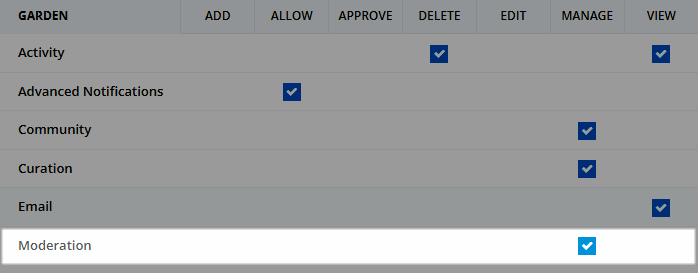
Only Admins can create, edit, or delete community rules. Users must belong to a Role with the Garden > Moderation > Manage permission to perform warning and note actions (this is typically Admins and Moderators).
- Warn users
- View warnings
- Add notes
- View notes
- Edit/Delete notes
Warning levels and expiry
When Admins or Moderators warns a user, the severity of the warning determines how many points are added to the user’s warning level and when the warning expires. Admins can see a user’s warning level from their user profile via a banner at the top; Moderators can see the details of warning and expiry from the Notes tab. If a user reaches certain warning level thresholds, they will be punished (Restricted or Banned).
Each warning has an associated expiration, such as 5 days or 2 weeks. As these expirations are reached, the points associated to the warning are removed from the user's warning level. So, if a user is banned but a number of points expire, the user will no longer be banned.
Warning Level 3: Restricted
Users who reach Warning Level 3 are considered restricted. This means:
- A jail icon is overlaid over the user’s avatar.
- The user cannot start new posts.
- The user is flood-controlled so they can post only once every 150 seconds.
- The user’s signature is hidden.
The idea behind being restricted is to "digitally slap the user on the wrist" so they understand there are consequences to inappropriate behavior, but to let them continue to be a part of the community and give them an opportunity to correct their behavior.
Warning Level 5: Banned
Users who reach Warning Level 5 are banned from the community until the points that led to this threshold expire.
Warnings & Notes feature overview
Community rules and warnings are built into Vanilla core. Admins can create and manage community rules, configure warning types, and use warnings to respond to rule violations. Admins and moderators can also add private notes to user records. The sections below explain these workflows.
- The Rules page is available in Moderation > Settings > Rules. Here, Admins can create and manage Rules that define how you expect community users to behave.

- You can create Warning Types (e.g., Minor, Major, etc.) and assign a point value to each. When your rules are broken, you can then use the Warn feature to give an offending user one of these warning types and its associated point value. If a user reaches the five-point threshold, they'll be banned from the community.

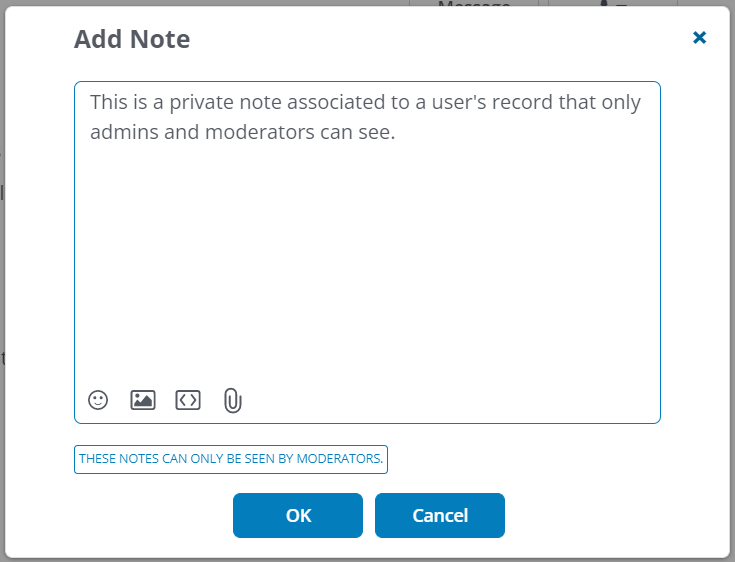
- Admins and Moderators can also add private notes to user records. These notes are visible to Admins and Moderators only, and are for internal record-keeping purposes.
Each of these features is discussed in more detail in their associated sections below.
Using community rules and warnings
Community rules and warnings are built into Vanilla core; you do not need to enable a separate add-on. The sections below explain how to configure and use these features.
Create Warnings Types
When warning a user, you'll be able to select a Warning Type that best matches the offense.
TIP: In addition to Warning Types that are punitive (i.e., they assign points), consider creating a "Notice" type that doesn't assign points, but rather serves as a "first-offense warning." Remember, some users may break a rule out of ignorance, not malice.

Manage community rules
Admins can use the Rules page to create and manage the rules members should follow when participating in the community.
Access the Rules page
In the Admin Dashboard, go to Moderation > Settings > Rules.

Only Admins can create, edit, or delete community rules.
Review your community rules
The Rules page lists each rule's Rule and Description. Existing rules appear in their current order. Each rule includes actions to edit or delete it.
Add a rule
To add a rule:
- Select Add rule.
- Enter a Name.
- Enter a Description that explains the rule to community members.
- Select Save.
Both Name and Description are required. To close the window without creating the rule, select Cancel.
Edit a rule
To update an existing rule:
- Find the rule you want to change.
- Select its edit action.
- Update the Name or Description.
- Select Save.
Both Name and Description are required when updating a rule. To close the window without saving your changes, select Cancel.
Delete a rule
To delete a rule:
- Find the rule you want to remove.
- Select its delete action.
- Review the confirmation message.
- Select Delete rule to permanently remove it, or select Cancel to keep it.
Deleting a rule cannot be undone.
When no rules have been added
If your community does not have any rules, the page displays No rules yet. Select Add rule to create your first rule.
Use a community rule in a warning
When you warn a member, select the community rule that the member has broken. The selected rule helps explain the reason for the warning.

The Infringed Rule section indicates which rule was broken and displays the description that you provided. This helps the member understand what exactly they did wrong.

Warn users / add notes
Warnings are built into Vanilla core. To issue a warning or add a note, follow the profile steps below.
NOTE: Create your Rules and Warning Types before issuing a warning. Refer to the associated sections above for help.
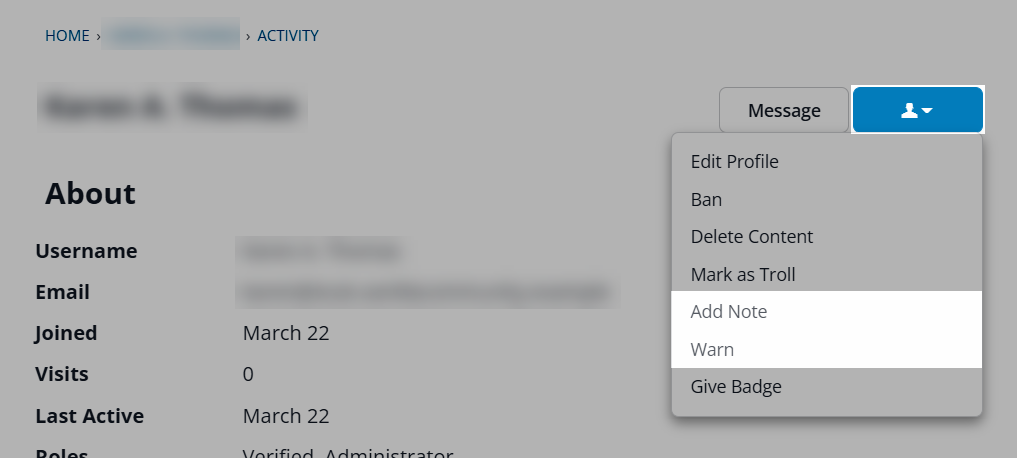
To issue a warning or note:
- Navigate to the user's profile.
- Click the "actions" dropdown and select Warn or Add Note.
Warn a user
Select Warn to display a dialog where you can select the Severity (these are your Warning Types), the Infringed Rule (these are your Rules), write a message to the user explaining what they did wrong, and an optional private note visible only to Admins and Moderators.

Here's an example warning message from the viewpoint of a user:

Add a note
Select Add Note to display a dialog where you can type a private note that is added to the user's profile.

Warnings and notes on user profiles
All warnings and notes issued to a user are stored on their profile, in the Notes section. To access them, navigate to the user's profile and click Moderation.

Here, you can also manage these warnings and notes via the options shown below.

Reversing a warning removes its points from the user’s warning level, but doesn’t remove the warnings from the user’s profile. Reversed warnings are noted with a "reversed" tag.

API v2 endpoints for rules
You can use the following API v2 endpoints to manage rules:

Additional resources
Learn about the Report and Warn options that are available with Reactions.
Click the link below to access a video expanding on what you learned in this article.